Negotiation chapter “Economic and monetary policy”
Find the preliminary studies on the sections “Freedom of establishment and freedom to provide services“ and “Financial services” via the links.
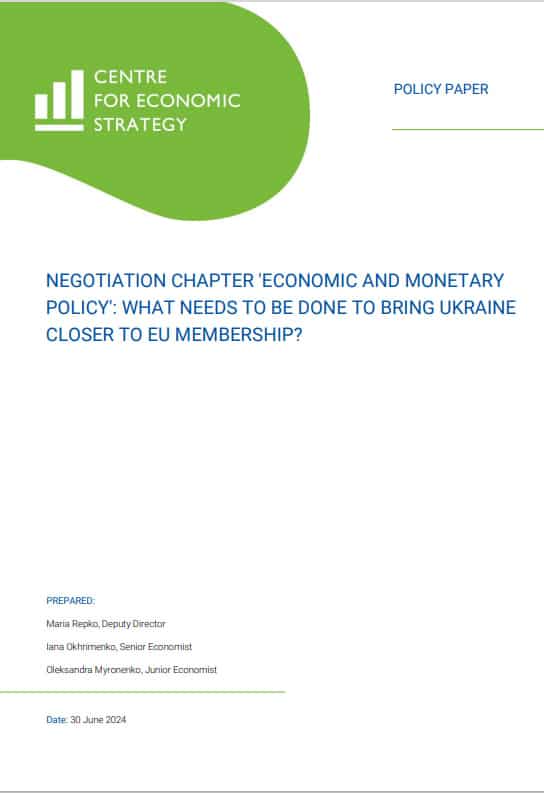
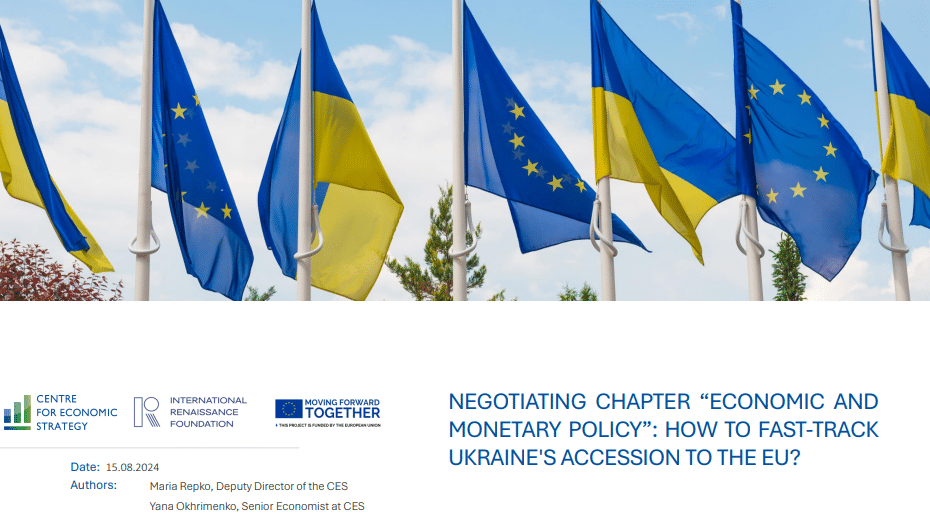
“Economic and Monetary Policy” is Chapter 17 of Ukraine’s negotiations on accession to the EU. This chapter covers various aspects of the candidate country’s adaptation to the EU’s economic and monetary system and is crucial for ensuring the candidate country’s effective integration into the EU’s Economic and Monetary Union.
Candidate states’ readiness for accession is assessed by key criteria, including a sufficient level of price stability, sustainability of public finances, independence and credibility of institutions responsible for policy development and implementation, and the legislative procedures that, in line with EU legislation, regulate the budget process at the national and local levels.
The challenges of a full-scale war do not allow Ukraine to fully align with EU standards, especially regarding quantitative limits on public debt and budget deficits. However, in some areas, introducing EU principles and practices is still possible even under current circumstances.
The main task of this paper is to define the priority areas for improving Ukraine’s economic and monetary policy to facilitate its accession to the EU.
In this study, we assess the implementation of the most relevant recommendations of the European Commission in 2023. In addition, we provide an overview of the key legal framework of European economic and monetary policy legislation to highlight the similarities and differences between European and Ukrainian law. We also review the European Commission’s guidelines for other candidate countries to identify potential issues for Ukraine in the accession process. In conclusion, we provide a list of priority actions to align Ukrainian practices in formulating and implementing economic and monetary policies in line with EU practices.
The material was prepared with the support of the European Union and the “Renaissance” International Fund within the framework of the joint initiative “European Renaissance of Ukraine”. The material represents the position of the authors and does not necessarily reflect the position of the European Union or the International Renaissance Foundation.
Explore more