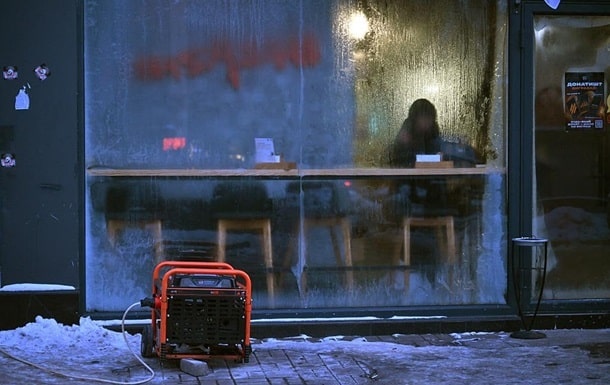
Kyiv Faces Worst-Case Winter Scenario. Olena Pavlenko from DiXi Group
“What’s Up With the Economy?” is a weekly podcast by the Centre for Economic Strategy in cooperation with Hromadske Radio, supported by PrivatBank.
Hosts Anhelina Zavadetska and Maksym Samoiliuk discuss with experts about what is happening with Ukraine’s economy.
In the new episode, we discuss the state of Ukraine’s energy system and Kyiv in particular, the harsh winter, gas reserves, and problems with state regulation of the energy sector.
The guest of the episode is Olena Pavlenko, president of the DiXi Group analytical centre.
We have summarised the main points of the conversation:
- Kyiv is experiencing the worst-case scenario for winter
Stable centralised heat supply depends on three basic components: gas, water and electricity. While the situation with water supply and gas reserves is under control, electricity has become the weak link.
According to the expert, the Russians have changed their tactics compared to the first years of the invasion. By placing its economy on a war footing, Russia has significantly increased its arsenal, allowing it to launch massive, targeted strikes on combined heat and power plants (CHPs). The main goal of these attacks is to create a large-scale humanitarian disaster in the capital.
Analysing the city’s resilience, Olena Pavlenko identifies four factors. The first is the intensity of the attacks, which is extremely high this season. The second is the availability of backup generation or equipment that can quickly replace damaged equipment. The third factor is weather conditions, as frost increases the load on the system and complicates the work of the crews. The fourth is the level of protection of facilities (physical fortifications such as gabions, and air defence systems for large CHPs).
In December, DiXi Group modelled various scenarios for the winter — now the worst is happening:
“Unfortunately, we are currently experiencing the worst-case scenario. This is when there is a combination of low temperatures and very high attack activity. Two of the four factors are currently at their worst levels. […] I think that at some point these questions will be asked of the Kyiv administration. Were all areas properly equipped with generators, was there anything that could be done to quickly restart the boiler rooms […]
I have not seen any summary data on how much we have lost in heat supply. I think we are still in the process of calculating and we are still sustaining losses. Either the Kyiv administration, the Ministry of Energy, or the Ministry of Community Development will give us some figures closer to the end of winter and the end of the heating season. And now all efforts are focused simply on preserving what we have,” says Pavlenko.
- Will Ukraine have enough gas to complete the heating season?
Despite difficult weather conditions and targeted enemy attacks on production facilities, Ukraine has every chance of successfully completing this heating season.
The situation with natural gas reserves remains stable and under control, which is the result of advance preparation.
“As of March 2025, all countries in the European Union and Ukraine also emphasised that they had sufficiently low gas volumes in storage after last winter. And everyone got busy getting ready for winter 2025-2026. Ukraine started talking about the need to pump in gas back in March last year.”
This systematic preparation resulted in the successful implementation of the resource accumulation plan. Thanks to the coordinated work of the Ministry of Energy, Naftogaz, and international partners, the planned 13 billion cubic metres of gas were pumped into underground storage facilities by the beginning of November.
It should be noted that gas is necessary to support the entire energy system. Due to significant damage to power grids and thermal power plants, a large amount of additional equipment that helps generate electricity runs on gas. Although targeted attacks on gas infrastructure are forcing extraction companies to slightly reduce production volumes, the state is quickly compensating for these losses. Ukraine continues to purchase additional fuel volumes with financial support from the EBRD and individual European countries.
- How does the dependence of the National Energy and Utilities Regulatory Commission (NEURC) on the government create problems for electricity imports?
Electricity imports are important for Ukraine: they can cover a deficit of more than 2 GW. In a situation where domestic generation has been damaged by Russian shelling, it is precisely the purchase of resources abroad that allows the grid to be physically maintained in working order.
However, for a long time, the import potential was not fully utilised. The reason was low price caps (maximum prices), which made it economically unprofitable for businesses to purchase more expensive European electricity.
When the decision to raise price caps was finally made, it came late, unexpectedly for the market and without public calculations. According to Olena Pavlenko, this situation demonstrates the institutional weakness of the NEURC.
The problem lies in the loss of the commission’s real independence. Following the 2019 Constitutional Court ruling, the NEURC effectively became part of the executive branch and is subordinate to the government.
“An independent regulator is one of the European Union’s requirements. Each EU member state must have such a regulator to independently oversee developments in energy markets and ensure their proper functioning. Moreover, such regulators communicate with each other in EU member states, they have a sort of super-regulator, ACER, which also cooperates with the Ukrainian regulator, but we are still not part of this full-fledged family,” the expert emphasises.
- Why are huge CHPs a thing of the past, and what will replace them?
Huge combined heat and power plants serving entire districts and cities are a relic of Soviet gigantomania. Such centralisation was once intended to reduce the cost of services for consumers, but in today’s reality, especially in the context of war and European integration, this approach is becoming dangerous and outdated.
Olena Pavlenko explains that as Ukraine moves towards EU membership, we will have to switch to European environmental standards, which require a complete phase-out of fossil fuels by 2050.
“We will need to switch to renewable resources or some local resources, such as biomass or geothermal energy. This means smaller boiler rooms, smaller thermal power plants, smaller coverage areas for a single specific generation, and it will be more widespread. From a security point of view, this also makes sense.”
In addition to the transition to local resources, the future lies in smart energy exchange, where excess heat is not wasted but circulates between consumers. This is the principle of the so-called fifth-generation district heating, which allows even non-obvious sources, such as supermarkets or data centres, to be used for heating cities.
__________________________________________________________
“What’s Up With the Economy?” is a podcast by the Centre for Economic Strategy in cooperation with Hromadske Radio, supported by PrivatBank.
The podcast is available in Ukrainian on different platforms by the link.
Explore more