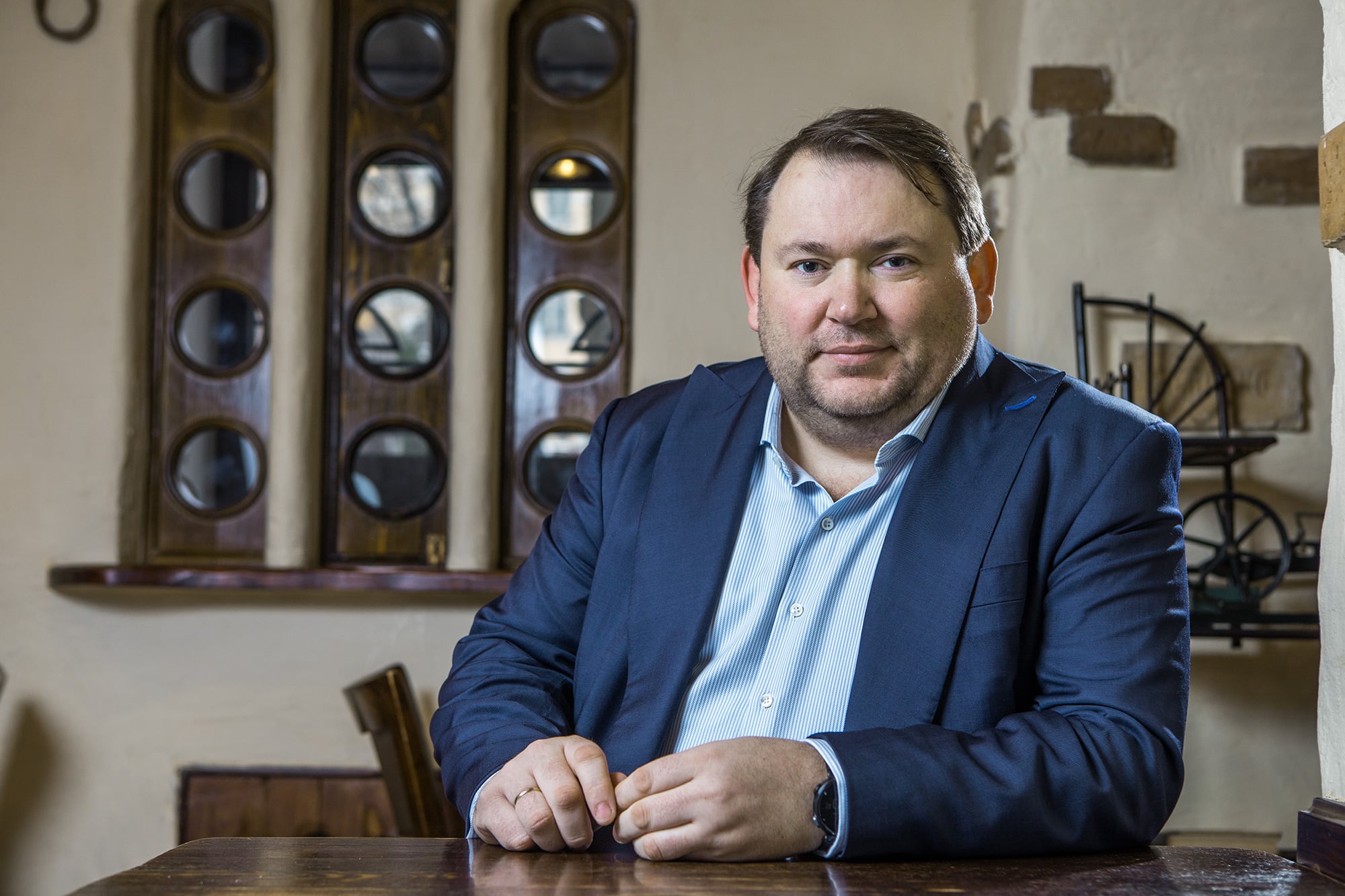
Ukraine’s Wartime Economy Has One Hedge Fund Holding the Keys
VR Capital has built a powerful position in Ukrainian bonds, giving it enormous influence as companies key to the war effort try to restructure their debt.
Ukrainian Railways is now locked in talks with its lenders as it tries to cut its debt load. An initial request to write off a fifth of the bonds’ face value was turned down by the group of fund managers leading the negotiations. Foremost among those creditors is VR Capital, a hedge fund that has built a commanding position in Ukraine’s corporate debt market.
With large stakes in the bonds of Ukrainian Railways and state-owned oil and gas company Naftogaz, the fund manager has significant leverage over Ukraine’s largest and most strategically important government-controlled businesses, at a time when the country is struggling to raise money to fund its defense. VR’s founder, Richard Deitz, has a reputation for being one of the most formidable distressed debt investors in emerging markets, one willing to fiercely defend his interests despite the challenging times that his debtors find themselves in.
The idea that the long-term health of the credit market and returns for foreign investors should take precedence over the immediate needs of society and the economy is not a popular one in Ukraine. As Maria Repko, deputy executive director at the Centre for Economic Strategy, a Ukrainian think tank based in Kyiv, put it:
“Survival is now more important to Ukrainians than a few hundred extra basis points on their bonds in the future.”
For many companies, especially those that have endured significant damage from the war, the cost of issuing international bonds remains prohibitively expensive, and they need to direct their cash reserves towards restoring essential infrastructure. That means that as they come to restructure their debt, some in Kyiv think it’s reasonable for investors to take a haircut. Before the invasion, issuers from Ukraine paid higher interest rates than those in other parts of Europe, because the country was seen as higher risk.
“A market risk premium was already included and for years investors have benefited from that premium,” Repko said. “Now it is only fair that they share the burden. Investors should expect massive haircuts because that would be fair, given the war.”
The International Monetary Fund estimates Ukraine’s funding shortfall to be around $136.5 billion over the next four years, which will most likely be covered by international donors and discretionary lending from the EU and others. But over the next decade, reconstruction costs will run to $588 billion, according to United Nations projections. Some of that will likely need to be met by funding from capital markets, with both the government and Ukraine’s corporates having to tap international investors for financing. The terms that this funding will come on may be dictated by the manner in which borrowers restructure their debts now.
Repko, from the Centre for Economic Strategy, disagrees with the approach. “Private markets are important but they cannot provide anywhere near the amount of funding needed” for the reconstruction, she said. The country will rely on other governments and multilateral agencies for the bulk of its financial support, and in the meantime, Ukraine needs to do everything it can to get through the conflict, even if that pushes up their yields after the war.
Source: Bloomberg.
More news from CES experts can be found at the link.
Explore more