Ukrainian defence industry, exports, dependence on China, and the Russian war machine. Liubov Shypovych from Dignitas
“What’s up with the economy?” is a weekly podcast by the Centre for Economic Strategy in collaboration with Hromadske Radio and supported by PrivatBank.
Hosts Anhelina Zavadetska and Maksym Samoiliuk speak with experts, entrepreneurs, analysts, and government officials about the current state of Ukraine’s economy.
In the new episode, we discuss the restructuring of our defence-industrial complex (DIC), the specifics of financing, arms exports, and the role of charitable foundations in the modern technological war.
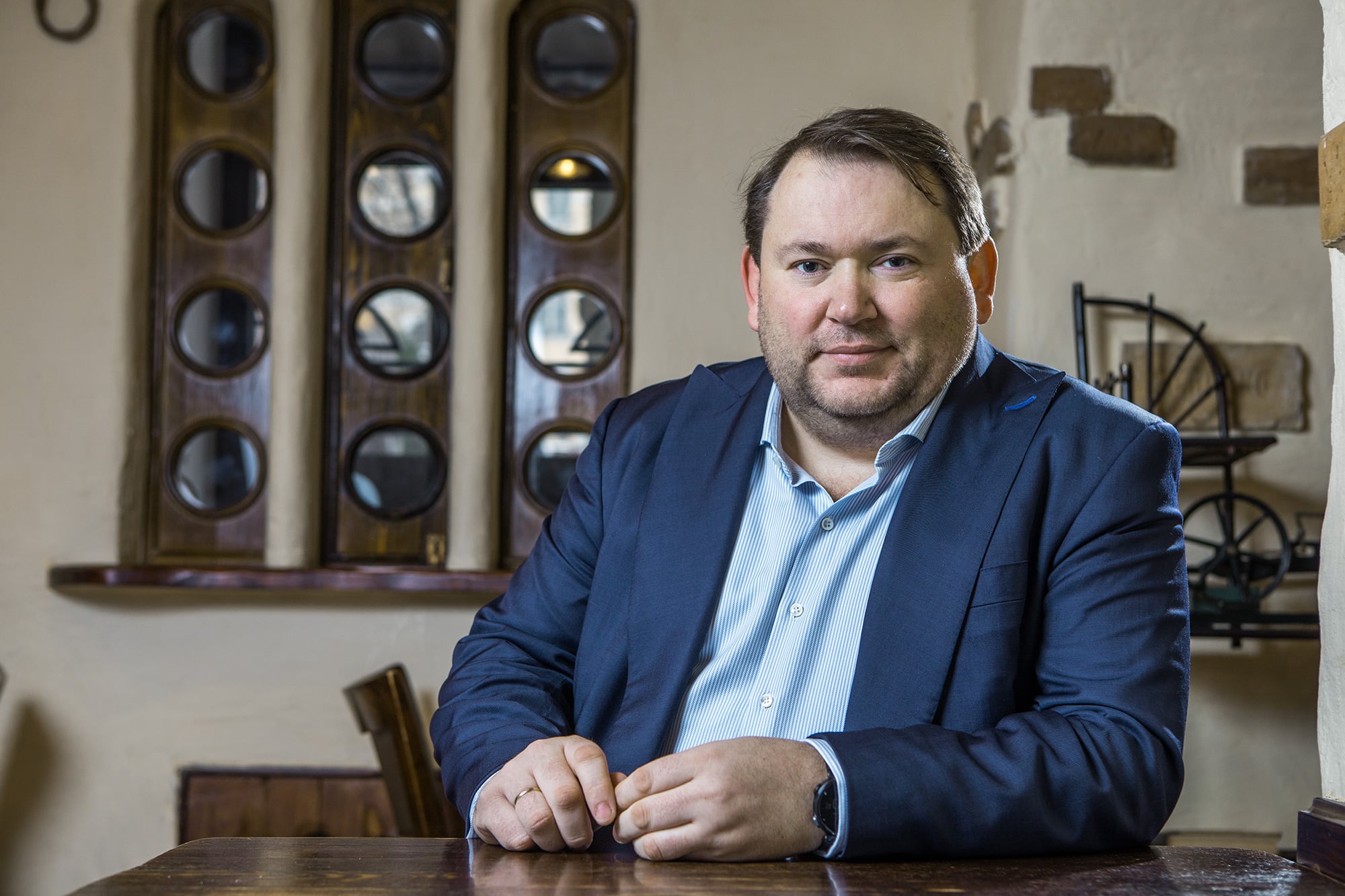
The guest of the episode is Liubov Shypovych, founder and CEO of the Dignitas charitable foundation.
We have summarised the main points of the conversation:
-
Why are Ukrainian and European manufacturers still dependent on China?
Despite the revolutionary leap of the Ukrainian DIC, which has grown from virtually nothing to one of the largest European sectors, domestic production remains largely limited to large-scale assembly. Although some companies claim to use almost 100% Ukrainian parts for drones and robots, in reality, this share is around 30-50%. Most components are still imported, and even so-called secondary components continue to be manufactured in China.
This dependence is not only a Ukrainian problem, but also a pan-European security issue. Strict climate regulations in the EU make it extremely difficult to produce critical components in Europe. For example, more than 90% of global magnet production is concentrated in China, as environmental restrictions there are far less stringent.
Shypovych emphasises that this creates enormous long-term risks for democratic countries:
“Democracies plan in electoral cycles, while China plans in millennia. Therefore, by investing in defence manufacturing, specifically in component manufacturing, China is securing a millennium-long advantage in the military sphere. Some countries are already talking about this publicly, while others are turning a blind eye, such as Canada, which has chosen China as its strategic partner, thereby increasing its dependence. […]
Due to the growth of green movements, Europe has created climate regulations that now make it impossible not only to expand, but even to produce certain components. […] And now the question arises: which is more important — climate change or security? Climate change affects survival, but when rockets and drones are flying at your head, it’s not very good for your health either.”
-
How to prevent the loss of intellectual property rights when approving arms exports?
The main consumer of the Ukrainian defence industry is the Ukrainian army. However, in certain sectors, there is already a surplus of products. Exporting is profitable for manufacturers (it is ‘real’ money and there are fewer quality requirements), but there are significant risks for the state.
Partner countries are typically interested not in purchasing ready-made Ukrainian drones for their warehouses, but in acquiring the technologies themselves and establishing production facilities on their own territory. Opening factories abroad gives Ukraine a short-term gain in the form of production diversification and protection from missile strikes, but strategically, we lose our status as a unique developer.
The expert explains the difference between exporting finished products and transferring rights to them:
“When we talk about exports, Ukraine is naturally interested in selling finished products. Countries that want to buy are more interested in acquiring technology. Again, during the Munich Security Conference, when the president presented the first companies for which exports were opened, it seemed to me that there was a conflation of terms, because it was production in those countries that was being opened up. And this is the export of intellectual property, not drones. In other words, it is not Ukrainian production facilities that will be busier, but German, British and French ones. The only advantage of this is that they will now be busy with orders for Ukraine.”
To protect its interests and prevent technology leaks (in particular to Russia via third countries), the state, represented by the Interdepartmental Commission on Export Control, must thoroughly and rigorously check the countries with which it plans to cooperate.
-
What can be done about the fact that the state will always be slower than civil society?
Technology on the front lines is changing at a rapid pace, and the state bureaucratic machine is physically unable to keep up with these changes. Therefore, innovative developments that have not yet undergone lengthy codification and certification, as well as the associated infrastructure (vehicles, communications, charging stations), continue to fall on the shoulders of volunteers and charitable foundations.
This phenomenon is not exclusively a Ukrainian problem:
“In any state system, in any democratic society that has a system of certain limits to protect against abuse, there is a need to change procedures, change policies, and establish mechanisms for something new. That is, any innovation, any change causes these changes in the state apparatus. When I travel to European countries, I say that civil society is just as involved there. It’s just that they don’t have military conflicts, so defence remains a closed issue. And during various disasters, such as COVID-19, it became clear that while governments were mobilising, the first few months were covered by charitable organisations and the NGO sector. So this is actually characteristic of all democratic societies. The state is always slower, and civil society steps in and fills these gaps while the state gets organised.”
The main task of the civic sector is not to replace the state forever, but to meet the needs of the ‘here and now,’ while putting pressure on the Ministry of Defence to scale up and take over the financing of these areas (as has already been successfully done with FPV drones and ground-based robotic systems).
__________________________________________________________
“What’s Up With the Economy?” is a podcast by the Centre for Economic Strategy in cooperation with Hromadske Radio, supported by PrivatBank.
The podcast is available in Ukrainian on different platforms via the link.
Explore more