Economic review in October 2025. Will the EU dare to give Russian assets to Ukraine?
Since March 2022, the Centre for Economic Strategy (CES) has been preparing monthly reviews of Ukraine’s economy during a full-scale war. The special topic of the October review is: «Will the EU dare to give Russian assets to Ukraine?».
All previous reviews can be found under the link.
Key changes in the Ukrainian economy in September:
- Monetary sector: Inflation fell to 11.9%, driven disinflationary trend. Food inflation and vegetables in particular decreases due to high harvests. The credit growth is strong and continues to grow after the post-invasion slump.
- Sectoral analysis: Real GDP grew by just 0.7% y-o-y in Q2 2025, due to delays in harvesting and a fall in government consumption. However, the economy was supported by steady consumer demand and improved exports. The energy situation deteriorated in October due to renewed Russian shelling, which is expected to restrain economic growth in the coming months. The EU Council has agreed to reduce or eliminate customs duties on various Ukrainian agri-food products.
- Fiscal sector: In September 2025, state budget revenues reached UAH 147 billion, up 25% y-o-y, with every third hryvnia coming from import VAT. Income and profit taxes grew strongly, while total revenues fell 22% m-o-m due to seasonal PIT fluctuations. In August, expenditures rose 28% m-o-m to UAH 462.5 billion, driven by a 49% increase in war spending — the highest in 2025. The budget deficit for January–August reached UAH 822 billion, largely financed by foreign borrowing.
- Special topic: Will the European Union dare to give the Russian frozen assets to Ukraine? There is a total of €289.5 bn of Russian frozen assets. €209.2 bn are in the European Union, €180 bn of which are in Belgium. Under the proposed Ukraine Reparation Loan, the EU would borrow this cash associated with Russia’s assets and lend €140 bn to Ukraine interest-free. The EU scheme can cover 2-3 years of the war expenditures for Ukraine. But is it the best option to fund the war?
See our report below for further details.
Panelists:
- Iana Okhrimenko, Senior Economist at CES.
- Vladyslav Rashkovan, Alternate Executive Director for Ukraine at the International Monetary Fund.
- Martin Sandbu, the Financial Times’s European economics commentator.
- Tinatin Tsertsvadze, Advocacy Advisor at the Open Society Foundations.
- Mykola Yurlov, Counsellor, Department of International Law, Ministry of Foreign Affairs of Ukraine.
Moderator: Maria Repko, Deputy Director of CES.
Key takeaways:
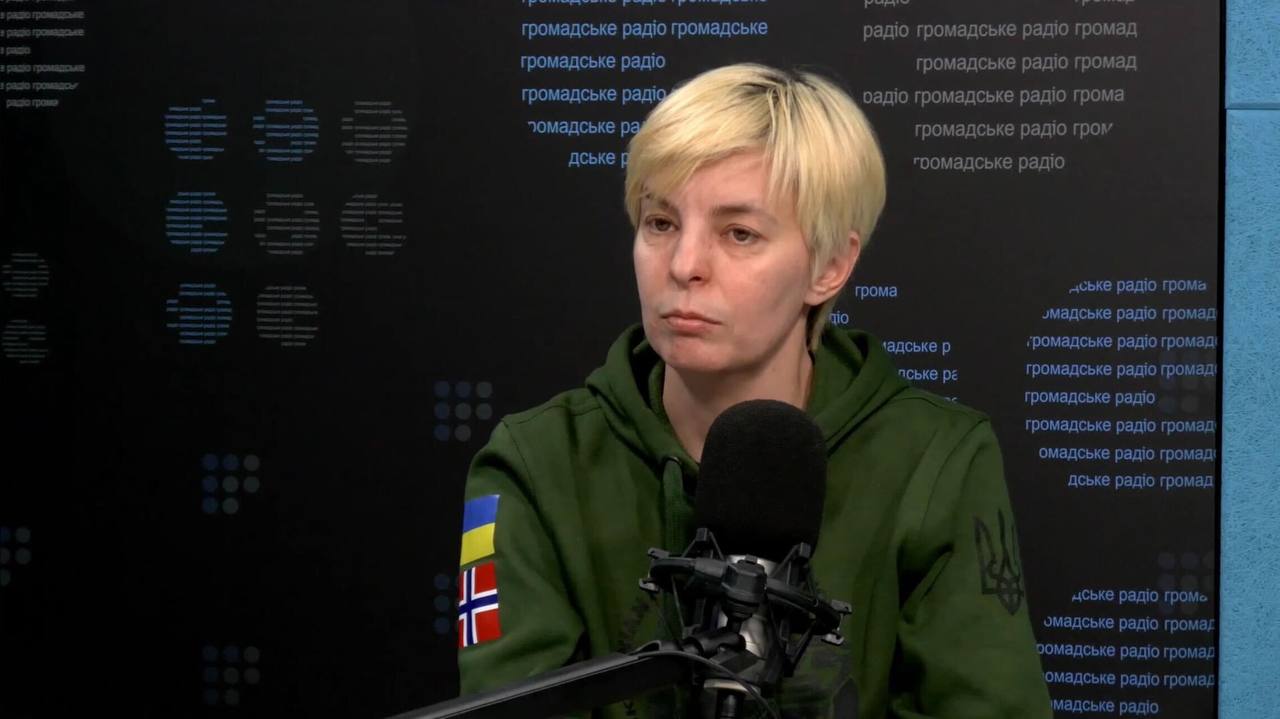
Senior Economist at the Centre for Economic Strategy, Iana Okhrimenko, presented a study analyzing how European financial markets reacted to news about the possible confiscation of Russian assets:
«From a methodological standpoint, we used a simple yet reliable approach — analyzing how markets responded to news related to the freezing, use, or confiscation of Russian assets. The main conclusions are as follows: news about the freezing of assets caused almost no reaction — the market ignored them, with no statistically significant changes observed. However, reports about the potential use of these assets triggered a short-term shock, which nearly disappeared within two weeks. Moreover, we found that this shock was perceived not as a problem of individual countries but as a pan-European risk factor».
Vladyslav Rashkovan, Alternate Executive Director for Ukraine at the International Monetary Fund:
«The European Commission is already working on the legal design of this mechanism [for the use of Russian assets — CES], and it is likely that a decision will be ready by mid-November. (…)
It is expected that the instrument will become operational in the first quarter of 2026, once the member states provide guarantees to the European Commission in case of potential legal claims from Russia.
In terms of amounts, around €45 billion from the assets will be allocated to cover the ERA program, as it is based on the future income generated by these assets.
The remaining €140 billion will likely be divided — approximately €100 billion for military needs and €40 billion for the IMF program. The residual €6–7 billion we expect to receive from the United Kingdom, Canada, possibly Japan and the United States, as well as from the World Bank and the Nordic countries».
Tinatine Tsertsvadze, Advocacy Adviser at the Open Society Foundations:
«As always in the EU, technical and political aspects are intertwined: it is necessary to determine the legal mechanism and find political consensus. Since most of the assets are in Belgium, that country is particularly cautious: even if lawyers say it is safe, Russia could still file a lawsuit. For Belgium, as a mid-sized country, the risk of losing such a case — even decades later — is serious. That is why Belgium insists on shared responsibility among all member states».
Mykola Yurlov, Adviser, Department of International Law, Ministry of Foreign Affairs of Ukraine:
«When it comes to distributing funds, we also need to think about long-term reconstruction and compensation. Following the 2022 UN resolution, an International Register of Damage was established under the Council of Europe. Starting in 2025, not only Ukrainian but also foreign individuals and legal entities affected by Russian aggression will be able to submit claims.
The next step will be the creation of an International Compensation Commission, a convention for which is planned to be signed on December 15–16. After ratification by 25 states, it could begin its work as early as next year, and by 2027 start issuing compensation decisions. Ukraine proposes to reserve part of the reparations loan funds for the Commission’s compensation fund».
This event has been funded by UK International Development from the UK government; however, the views expressed do not necessarily reflect the UK government’s official policies.
We also recommend reading the insightful commentary by Financial Times journalist Martin Sandbu.
This event has been funded by UK International Development from the UK government; however, the views expressed do not necessarily reflect the UK government’s official policies.

Explore more