How the world is returning to nuclear energy — and what it means for ukraine. Olha Kosharna
“What’s up with the economy?” is a weekly podcast by the Centre for Economic Strategy in collaboration with Hromadske Radio and supported by PrivatBank.
Hosts Anhelina Zavadetska and Maksym Samoiliuk speak with experts, entrepreneurs, analysts, and government officials about the current state of Ukraine’s economy.
In the new episode, we discuss the role of nuclear power in Ukraine’s energy system, the global return to nuclear generation, and the future of the Zaporizhzhia Nuclear Power Plant, which remains under Russian occupation.
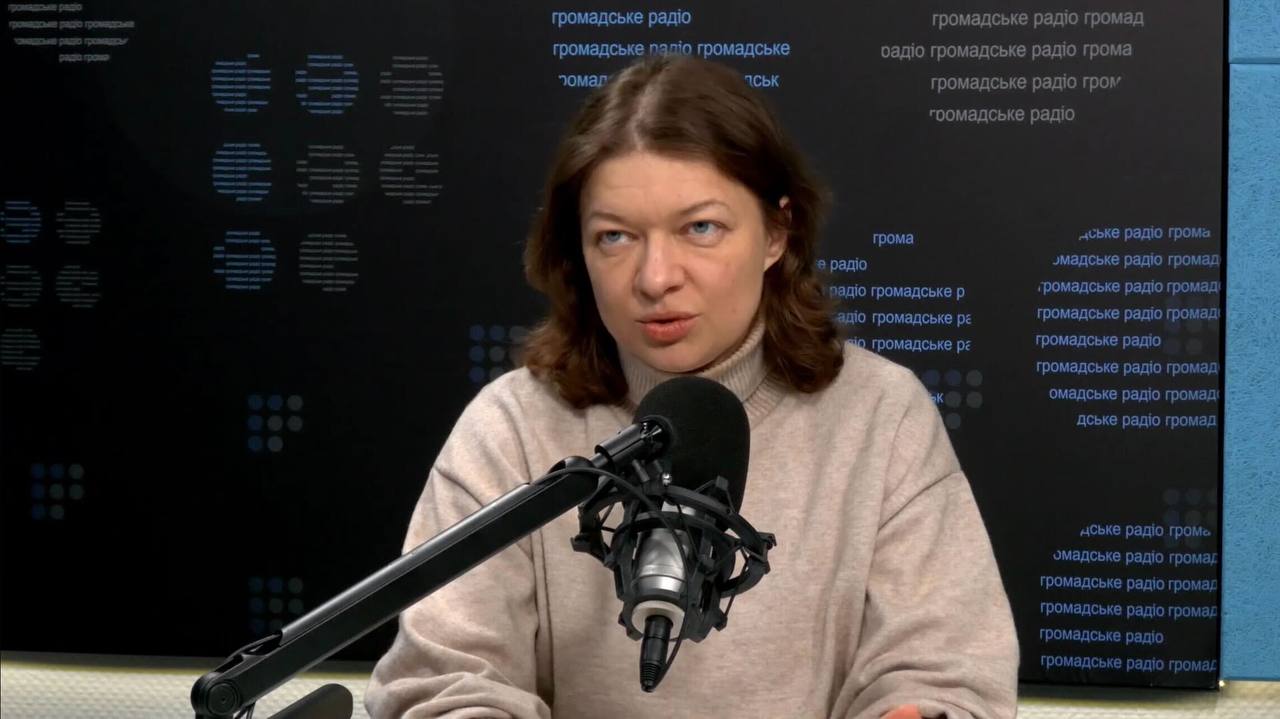
The guest of the episode is Olha Kosharna, nuclear safety and nuclear energy expert, and a former board member of Ukraine’s State Nuclear Regulatory Inspectorate.
We have summarised the main points of the conversation:
Nuclear power in Ukraine: what role does it play in the energy system
Nuclear power plants provide the baseload of Ukraine’s energy system — stable generation that is independent of weather or season. Before the war, balance was also maintained by thermal and hydroelectric generation. Now, with a significant share of thermal capacity destroyed or damaged, nuclear power carries a substantially greater part of the load.
“Thanks to nuclear energy, we somehow got through this winter.”
Kosharna emphasises, however, that nuclear generation cannot function in isolation — it requires flexible capacity for grid balancing. Rather than rebuilding large thermal plants that are already well within Russian targeting range, she argues for a decentralisation approach: cogeneration gas turbine and gas piston units distributed across the country, which are considerably less vulnerable to missile strikes.
The global nuclear renaissance: how many reactors are being built — and who has changed position
According to IAEA data, 415 nuclear reactors are currently in operation worldwide, with a further 72 under construction. This year alone, China connected two new units to the grid and began construction on five more.
Poland offers an instructive example. Despite having no commercial reactors of its own, it has already submitted licensing documents for two large Westinghouse units. 200 Polish companies already have experience working on nuclear projects as subcontractors for France’s EDF — even though Poland itself has never operated a commercial reactor.
The shift across Europe is notable. Belgium has stepped back from its plans to phase out nuclear capacity. France, which had planned to reduce nuclear’s share to 50% of generation by 2030, has reversed course and now plans to build six new units. Most striking is Germany’s position: in 2025 it acknowledged that its 1998 decision to exit nuclear power was a mistake — a political decision that created significant grid management problems for neighbouring system operators, as surges in solar and wind generation were offloaded to them at negative prices.
“Crises like the one around the Strait of Hormuz push countries to reconsider their energy mix. Nuclear power is baseload — stable in any weather. That is why we see this combination emerging: renewables, nuclear plants, and gas capacity for balancing at peak demand.”
How safe are Ukraine’s reactors — and how long can they operate
Since 1991, Ukraine has participated in all major international nuclear safety initiatives and has carried out extensive modernisation of its plants. After the Fukushima accident, Ukrainian stations underwent a safety reassessment under an EU initiative and received positive assessments. IAEA missions have not identified critical violations.
All nine of Ukraine’s operating reactors have exceeded their original design life of 30 years — but Kosharna notes that this figure was set with a significant safety margin. The critical variable is the condition of the reactor pressure vessel, which is assessed every ten years using surveillance samples. In the United States, many units have been licensed to operate for 60–80 years. Kosharna considers 60 years a realistic target for Ukraine’s Soviet-era reactors, with more possible depending on the condition of the vessel steel.
“It depends on the steel of the vessel. But I think 60 years is a realistic operating life for Soviet-era units. Maybe more.”
The primary threat to Ukraine’s nuclear plants at present is not their technical condition but the military situation: strikes on Ukrenergo substations through which plants export power, forcing output reductions during repairs.
The Zaporizhzhia Nuclear Power Plant: does Ukraine need it back — and what will happen to it
The Zaporizhzhia NPP — has been under Russian occupation since March 2022. Russia made two attempts to connect it to its own grid (in August and September 2022) and has plans to supply electricity to occupied Crimea.
One episode is illustrative of how Russia treats the plant. In 2023, Russian military forces destroyed the Kakhovka dam for military purposes without coordinating with Rosatom — despite the reservoir providing cooling water for the ZNPP reactors.
Ukraine’s electricity consumption has fallen substantially: peak winter demand in 2020–2021 reached 27 GW; this winter Ukraine entered with 18 GW. For now, the system is managing without the ZNPP. After reconstruction and reindustrialisation, power needs will rise — but by how much depends on the structure of the recovered economy.
On the legal question, Kosharna’s position is unambiguous:
“UN General Assembly resolutions, IAEA resolutions, and Board of Governors resolutions must state clearly: the ZNPP is Ukrainian property. And Ukrainian property can only be operated by Ukrainian personnel holding Ukrainian licences.”
“What’s Up With the Economy?” is a podcast by the Centre for Economic Strategy in cooperation with Hromadske Radio, supported by PrivatBank.
The podcast is available in Ukrainian on different platforms via the link.
Explore more