‘It’s blackmail’: Ukrainians react to Trump demand for $500bn share of minerals
Ukraine’s lithium deposits are among biggest in Europe and the US is looking for ‘payback’ for previous military assistance.
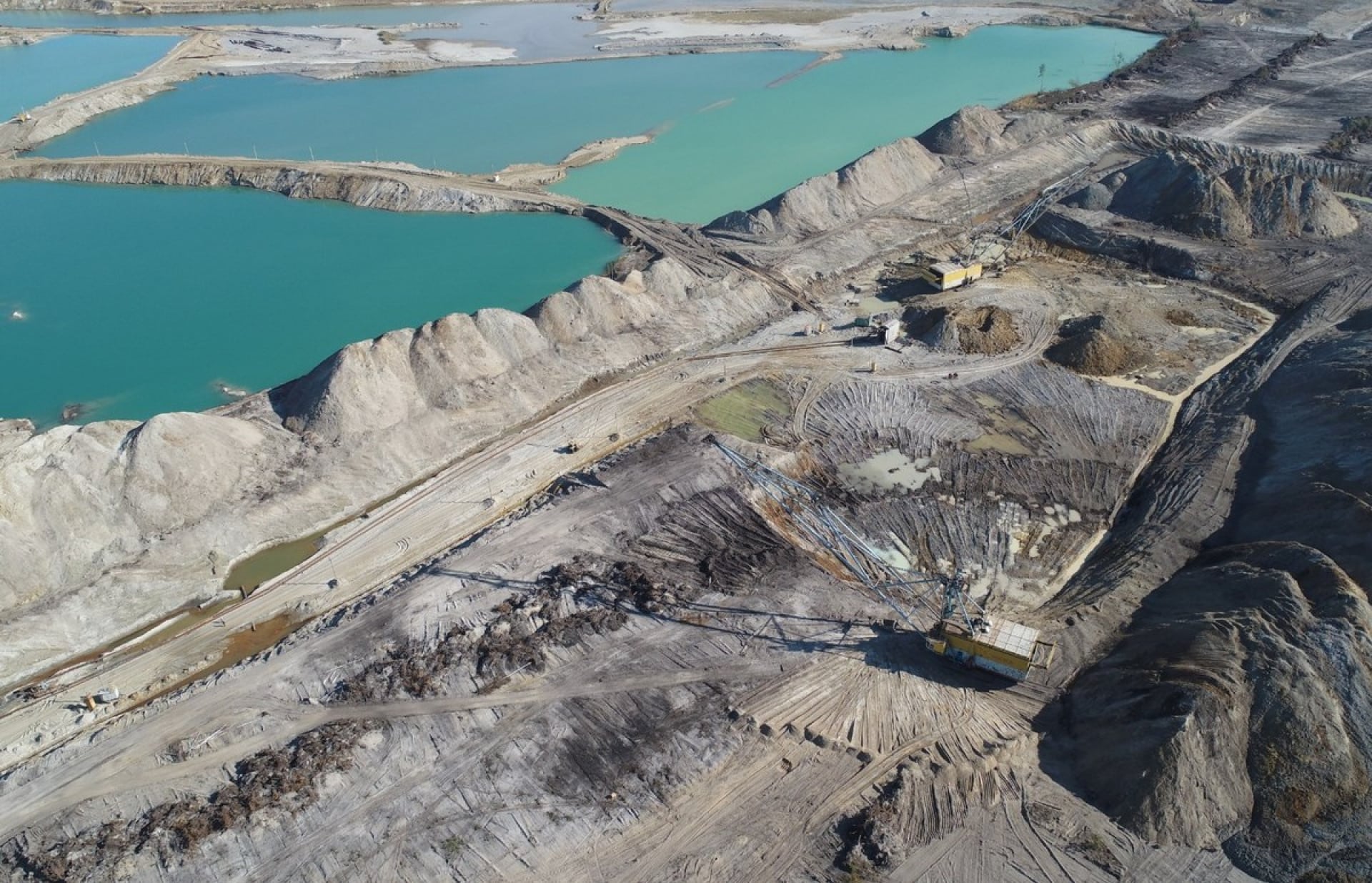
The lithium deposit is located in central Ukraine’s Kirovohrad region, about 350km (217 miles) south of the capital, Kyiv. Solar-powered scientific instruments measure air temperature and seismic activity. In 2017 a Ukrainian company, UkrLithiumMining, bought a government licence to exploit the site for 20 years. It cost $5m. Geological surveys confirm that the ore, known as petalite, can be used to produce batteries for electric vehicles and mobile phones.
According to the US president, Donald Trump, these underground reserves should now belong to America. Last week, the new US treasury secretary, Scott Bessent, visited Kyiv. He presented Ukraine’s president, Volodymyr Zelenskyy, with a surprise claim to half of Ukraine’s mineral wealth, as well as to its oil, gas, and infrastructure such as ports. The $500bn bill was “payback” for previous US military assistance to Ukraine, the White House explained.
Zelenskyy refused to sign the agreement. He made it clear Washington had to give security guarantees before any deal could be reached on the country’s vast natural resources, about 5% of global mineral reserves. He also pointed out that the US had given $69.2bn in military aid – less than the sum Trump was now demanding – and added that other partners such as the EU, Canada and the UK might be interested in investing, too.

Speaking on Wednesday, shortly before Trump called him “a dictator”, Zelenskyy said he could not “sell Ukraine away”. He was willing to work on “a serious document”, he said, which ensured Russia did not attack Ukraine again.
US and Ukrainian negotiators were seeking to move past the spectacular breakdown in transatlantic relations and to finalise a deal, Bloomberg said on Friday.
Commentators have described Trump’s aggressive ultimatum as “mafia imperialism”, a “colonial agreement”, and reminiscent of what the Europeans did in the 18th century when they carved up Africa.
“It’s as if we lost the war to America. This looks to me like reparations,” Volodymyr Landa, a senior economist at the Centre for Economic Strategy thinktank in Kyiv, said. Ukraine’s overall reserves are worth $14.8tn. They include lithium, titanium and uranium, as well as coal, steel, iron ore, and undersea shale gas. Many deposits had not been developed, Landa said, either because they were not feasible or due to political instability.
Others are in areas occupied by Russia. Ukraine’s lithium deposits – about 500,000 tonnes’ worth – are among the biggest in Europe. One site is in Kruta Balka, near the southern port of Berdiansk, which the Kremlin occupied early in its 2022 invasion. Another is in the Shevchenkivskyi district, on the frontline in the eastern Donetsk oblast. Russian troops recently took control of the area.
The deposit in Liodiane is one of two under Ukrainian control.
According to Landa, Ukraine’s minerals sector has “high risks and high rewards”. There is a long history of foreign investment, he said, with French, Belgian and British engineers developing the country’s coal industry in the 19th century. The city of Donetsk – seized by Russia in 2014 – was originally named Hughesovka, after the Welsh businessman John Hughes, who founded a steel plant and several coalmines in the region.
Source: The Guardian.
Other blogs of CES experts via the link.
Explore more