The steel industry at a crossroads: CBAM, logistics, and the future of ArcelorMittal Kryvyi Rih
Ukraine’s largest steel mill, ArcelorMittal Kryvyi Rih (AMKR), has hit a critical wall in its export operations. As of January 1, 2026, the introduction of the European Union’s Carbon Border Adjustment Mechanism (CBAM) has effectively halted the plant’s exports to its primary market. Mauro Longobardo, CEO of ArcelorMittal Kryvyi Rih, recently revealed that European clients canceled all orders for the first quarter of 2026 upon learning they would face additional CBAM levies ranging from $60 to $90 per ton.
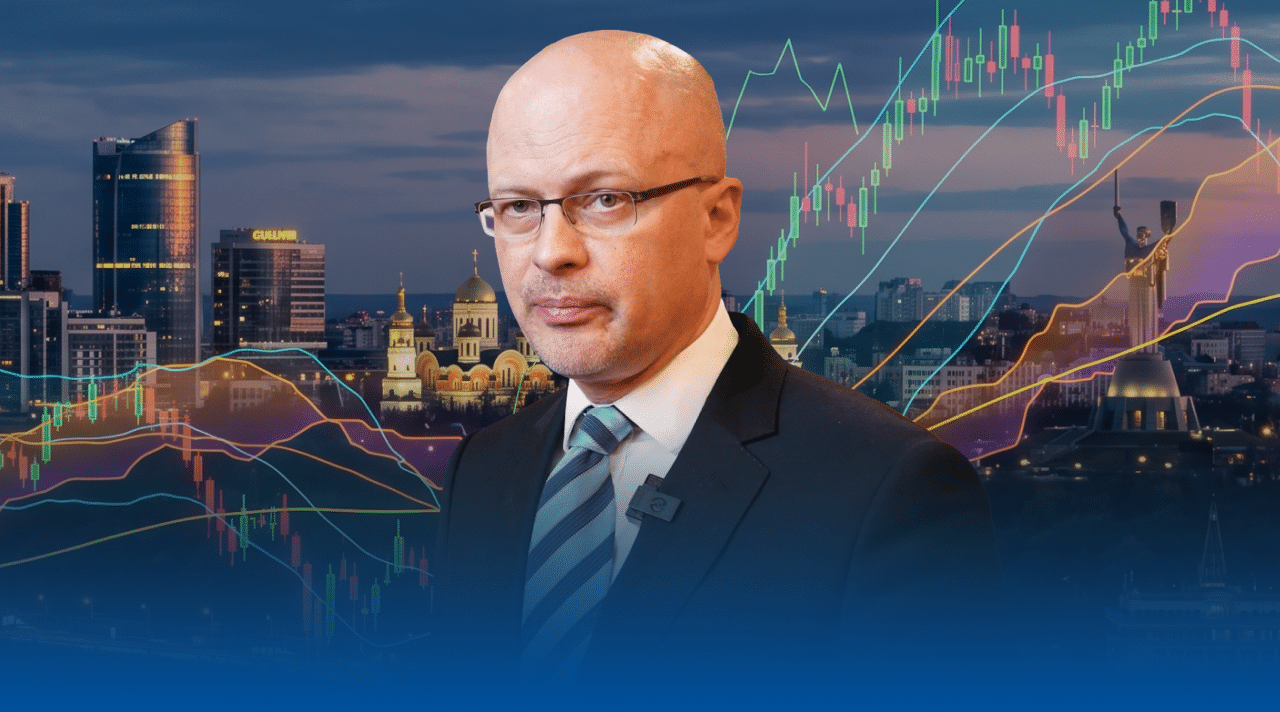
In a recent episode of the «What’s Wrong with the Economy?» podcast, Oleh Krykavskyi, Government Relations Director at AMKR, discussed the existential challenges facing the industry — from «green» taxes to the crushing costs of wartime logistics.
“What’s up with the economy?” is a weekly podcast by the Centre for Economic Strategy in collaboration with Hromadske Radio and supported by PrivatBank.
Hosts Anhelina Zavadetska and Maksym Samoiliuk speak with experts, entrepreneurs, analysts, and government officials about the current state of Ukraine’s economy.
1. The CBAM shock: A sudden stop to EU exports
The implementation of CBAM was intended to prevent «carbon leakage», but for a country at war, it has functioned as a trade barrier. AMKR had planned to export 1.25 million tons of steel to Europe in 2026. Instead, approximately half of the company’s planned production for the year is now blocked.
The consequences are already physical: the plant has suspended operations at its blooming shop and its subsidiary, the Casting and Mechanical Plant. This decision directly impacts over 3,000 employees.
2. Discrepancies in calculation: Government vs. business
A major point of contention lies in how the carbon tax is calculated. While the European Commission provided preliminary estimates that suggested a much lower impact, the reality on the ground for Ukrainian manufacturers is vastly different.
As Krykavskyi points out, the issue has reached a critical political level:
«The issue of CBAM is a high-level political issue. It must be brought to the level of the President and Ursula von der Leyen. We are communicating with the European Commission, showing them that their position regarding Ukraine is wrong, and the methodology is incorrect.»
The core of the disagreement lies in the data sample used by EU regulators. According to Krykavskyi, by looking only at the war years, the statistics fail to show the true decline of the industry:
«In essence, the European Commission’s methodology and calculations involved taking the last three years: 2022, 2023, 2024, and using this example to show how wonderfully Ukrainian metallurgy is surviving despite the war. They did not look at 2021 or 2020, where a major slump could be seen. If you take such a sample and look at only the last 3–4 years, it doesn’t look that scary.»
3. Capacity reductions and the «green» transition gap
The industry is currently a shadow of its pre-war self. While 2021 was a year of growth and investment, 2026 is a year of survival. Krykavskyi notes that across the country, only about a third of total production capacity remains operational:
«For example, our enterprise is currently operating at an average of 50% capacity. If we speak in broad strokes, comparing today’s situation with 2021, I think no more than a third of our production capacity nationwide is currently in operation. I mean on a national scale, because we have either lost the rest for certain reasons or it is standing idle.»
Transitioning to «green» steel requires massive capital, which has been depleted by the war. Funds once earmarked for modernization were diverted to cover the immense losses caused by Russian aggression.
4. High logistics costs and imported coal
Even without the carbon tax, the cost of getting Ukrainian steel to market has skyrocketed. Before the full-scale invasion, AMKR relied on the nearby Port of Mykolaiv. Today, they are forced to use expensive rail routes with multiple gauge changes at the borders.
Oleh Krykavskyi notes the drastic increase in overhead:
«In general, logistics costs have increased by an average of about 4 times. This includes not only Ukrzaliznytsia freight rates but also increased insurance payments… If we want to export something to the Baltic countries now, we have to do two transloadings due to the difference in track gauges.»
Production costs are further pressured by the loss of domestic raw materials. With coal mines in the Pokrovsk region under threat, the plant must import essential coking coal from as far away as the US, Colombia, and Australia.
As Krykavskyi explains:
«Steel production is a process that consists not only of iron ore, which we have nearby, but of many raw materials that now have to be imported from afar. And, again, there is no way around this, and unfortunately, we cannot shorten the logistical tail.»
5. ArcelorMittal is a giant: 17,000 lives at stake
Krykavskyi emphasizes the scale of the enterprise’s social impact, ArcelorMittal Kryvyi Rih is more than just a factory; it is the economic heartbeat of a city of 600,000 people. The survival of the plant dictates the survival of the local community.
«It is truly a giant that supports the city, because about 17,000 people work at our enterprise and its subsidiary. On average, let’s divide by 4 — this is how we see how many families are connected to our enterprise… One person working at a metallurgical enterprise generates 6 to 8 jobs.»
The director further highlights that nearly half of Kryvyi Rih depends on the plant’s activity, from contractors and service providers to the municipal budget.
«Our enterprise is simply gigantic; its territory can be compared to a Western Ukrainian regional center. This includes the service sector, contracting organizations that perform repairs, employees, even security firms. These are thousands and tens of thousands of people tied to one enterprise. That is why it is truly what they call a city-forming enterprise.»
Without a reassessment of the CBAM timeline or significant support for the «green» transition, one of Ukraine’s most vital economic pillars faces a grim future. The company has called on the European Commission to grant a three-year postponement of CBAM for Ukraine to allow the industry to recover from the shocks of war.
Explore more