Almost 60% of Ukrainian refugees in the EU are working outside their field of expertise.
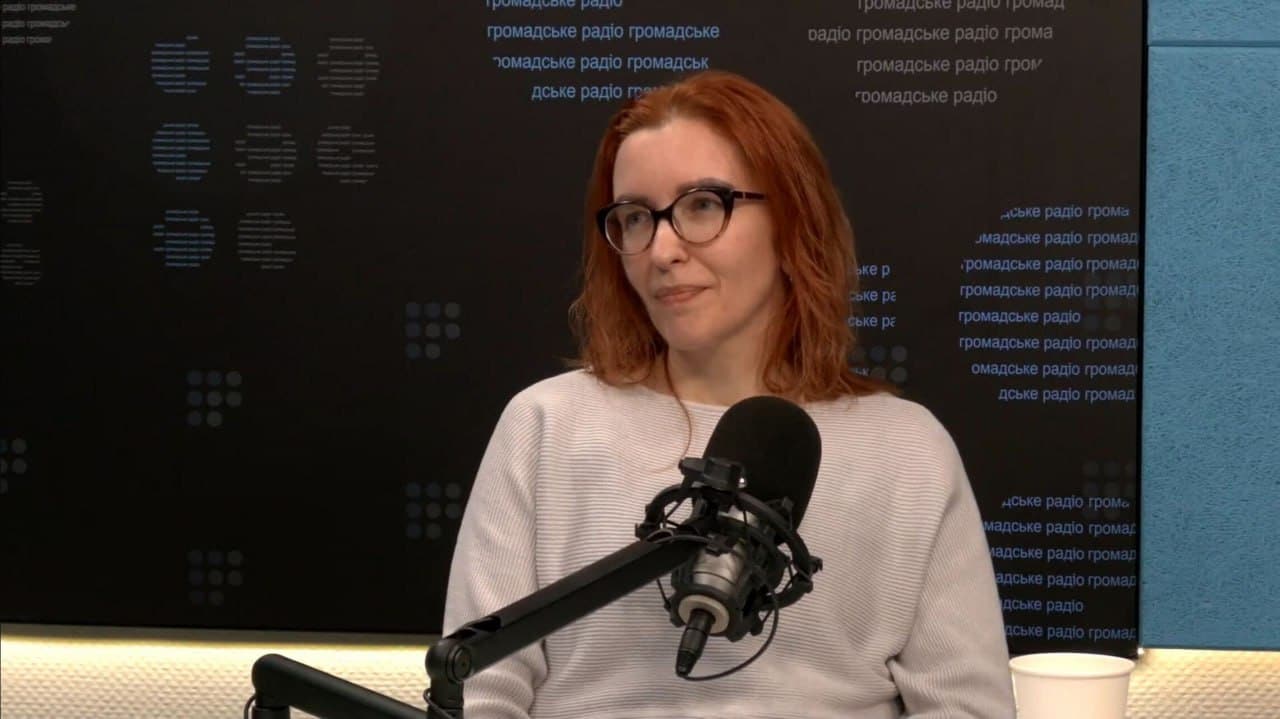
Almost 60% of Ukrainian refugees in the EU do not work in their field of expertise, according to a study conducted by the United Nations High Commissioner for Refugees. Speaking on Ukrainian Radio, Iryna Ippolitova, senior economist at the Centre for Economic Strategy (CES), noted that those with better language skills are more likely to work in their specialization. When it comes to skilled work, it requires an advanced level of language proficiency, B2 or C1. Iryna Ippolitova noted that for unregulated professions, recognition of educational documents is sufficient, confirming the possession of a bachelor’s or master’s degree obtained from a Ukrainian university. But for qualified professions, you have to show where and how you studied, and even a list of specific subjects. Then it is necessary to complete coursework in certain subjects, pass a theoretical and practical exam, and only then can you be granted the right to work.
Losses for the individual, for the country of residence, and for Ukraine
Research by the United Nations High Commissioner for Refugees indicates that almost 60% of refugees have a job, but work below their qualification level. In the Czech Republic, 72% of Ukrainian refugees are employed, in Poland 70%, and in Germany 46%. What economic price are Ukraine and Europe paying for such a loss of human capital when there is a ready specialist in their field, but they are working somewhere in a simple job?
This is indeed a loss of human capital. Such a situation has negative consequences for all participants: for the individual working outside their qualification, who simply loses this qualification over time. For the host country itself, because they could somehow use these people who arrived already trained and educated more effectively. Let us not forget that training a person involves significant costs. And it turns out that now this already accumulated capital is simply not being used. And for us, this is also bad, because if this person returns, we as a country will already have to deal with the consequences of this de-qualification. If a person does not engage in their work for a long time, they lose certain skills, and their qualification decreases. For us, this may also pose a problem in the future. I do not think this is some deliberate closed-door policy. Rather, it is a lack of a clear policy on the part of host countries aimed at using the people who arrived as efficiently as possible.
Language proficiency is essential
Why do countries treat this differently and why are the indicators so varied?
Several factors actually influence this at the same time, and they can operate differently and have different effects in different countries. A very important factor is language knowledge. Our study conducted earlier this year shows that those of our refugees who know languages better are more often already working in their specialization. And this is very logical, because if we are talking about qualified work, it indeed requires a fairly good level of language knowledge. And we are talking now about an advanced level, what is usually labeled as B2 or C1 level, when a person can speak freely on any topic and, in particular, on their professional subject matter. Here we are talking not even about everyday conversational language, but specifically about professional vocabulary. And if this language is very different from Ukrainian, like German or Dutch, this can be an additional significant barrier. The second factor is indeed the country, because in Germany the system is oriented toward better integration of people. It is a reception system for refugees and assessment of their potential. If they see that a person has a higher education, they are ready to finance this person, teach them languages, and then look for a job for them that corresponds to the education already received. They can afford this. If we talk about Poland and the Czech Republic, there is no such system there; a person arrives and has to take care of themselves and find a job. And naturally, the first jobs that need to be found quickly and easily are jobs that do not require language skills or require quite a basic level. These are certain less qualified jobs that are always more accessible because locals do not want to work them; these are not very prestigious jobs, often physically exhausting, heavy manual labor. Unattractive jobs with no very high requirements, and correspondingly no high competition from locals. This is a trap, because a person arrives, needs to settle down very quickly, find a job and income, ends up in such a job, and later it is hard to break out of there. We understand that if a person works all day, it is difficult even to go to courses and learn the language. When we talk about the recognition of Ukrainian diplomas and qualifications, even if it is not a very complicated procedure, it is still a procedure that requires certain efforts, because you need to understand where to turn. A language barrier arises here; you need to have documents, translate them, and they must be apostilled and notarized, which requires money. Any bureaucratic procedure creates an additional barrier, even if this procedure is adapted for Ukrainians, which, by the way, does not happen very often either. But there are cases, especially for certain shortage professions, such as medical workers, where some countries have indeed done this, but it is still an additional barrier that stops people. We must also remember that a refugee is a person who arrived in a new place and needs to build their life from scratch.
Much depends specifically on the country
To what extent are countries interested in using the professional experience of the arrived Ukrainian and helping them master skills and settle down faster?
This is a reaction to the labor market that exists in the country. If there is a need for medical staff, they may accommodate Ukrainian doctors, relax requirements, and pay for language courses—this happens. If there is a shortage of technical or engineering specialists, they can do the same for specialists in these fields, but this really depends on the situation in the country. And this factor of profession is also very important when we talk about recognition and working in one’s field; it also needs to be taken into account because the situation differs greatly for different professions. If we talk about the EU, there is such a concept as regulated professions, that is, professions with a clear list of educational and qualification requirements. And a candidate must meet these requirements so that all doctors, pharmacists, veterinarians, and architects necessarily confirm both their studies and their practical skills. For them, this procedure is more complicated. On the other hand, there are professions that are unregulated. This list of regulated and unregulated professions also depends on the country. They are different in different EU countries. And here it also depends heavily on where you ended up and what your profession is. But if it is an unregulated profession without these mandatory strict requirements, the decision can actually be made by the employer. You come, you have a certain education and qualification, and here the employer themselves can make a decision. Even if the employer is ready to do this, the local language will be required. There are small exceptions, international spheres such as IT, where you can get by with English.
In Germany, there is a migrant integration system that does not exist in Poland and the Czech Republic. In Germany, this system appeared long before Ukrainian refugees and was developed not for Ukrainian refugees, but in general for migrants, of whom there are quite a lot in Germany. And indeed, the country is ready to consider each case individually. If they see that a person has potential, yes, they are ready to pay for courses, not just the basic level. Because many countries actually pay for courses, but most often it is just a basic level so you can communicate in the street or in a shop. Germany is ready to teach up to advanced levels if they see this potential. There is an established system here that Ukrainian refugees simply entered. They also have the financial and economic capacity to do all this, because it is quite expensive, especially at the first stage, to receive, house, support, and train everyone until a person can integrate independently.
The procedure depends on the profession and the country
What stages do you have to go through to confirm your qualification and have your diploma recognized?
The procedure depends on the profession, as well as on the country, because the issue of education, if we talk about the EU, is left to individual countries. Each country can set certain educational requirements for certain professions. Therefore, when a person arrives in a country, it is in that specific country where they need to determine what requirements apply to which profession. And we also need to distinguish two points here. There is the recognition of educational documents, which may be sufficient for certain professions, where you simply confirm that you have a bachelor’s or master’s degree received from a Ukrainian university. And this is sometimes enough. But for some professions, it is necessary to go through the qualification recognition process to confirm that you actually know how to do something, and experience is taken into account. These can be practical and theoretical exams. This applies to unregulated professions with simpler requirements, where you can simply confirm the fact of studying at a Ukrainian university in a certain field, and that may be enough. But there are professions with higher requirements, where you have to show where you studied, how you studied, and even a list of specific subjects. And you need to complete additional subjects that were not in your study program, then pass a theoretical exam, a practical exam, and confirm that you can actually do a certain job. And only then can you be granted the rights. The language question is very important. All these exams take place in the language of the host country, which is also a huge barrier in reality.
Is there a flow of refugees observed from one country to another?
Usually, refugees do not move from country to country, because any move is a rather complicated and expensive process. Of course, there are such cases, but when we are talking about a family with children who need to find housing and a place to study, all this ties them very strongly both to the country and to the specific place where people ended up. Such cases of moving are not very frequent.
You can also read the article in Ukrainian on the Ukrainian Radio website at this link.
Find more news from CES experts at the link.
Explore more