Ukrainian economy in war times: Looking for a new equilibrium, June 2022
Here is the third monthly review of the Ukrainian economy under the pressure of a full-scale war. Also, check out the April and May reports. The latest study was supported by the German Economic Team.
The macrofinancial stability in Ukraine three full months into the war is experiencing a growing erosion. During the first two months, the regulators were able to hold the monetary, fiscal and exchange rate situation more or less at bay with strong restrictive measures and thanks to the rapid financial aid from abroad.
But in May several negative balance of payments shocks (e.g. imports recovery and insufficient foreign aid inflow) forced the NBU (National Bank of Ukraine) to react to the risk of an unfolding currency crisis with radical and unpopular policy measures.
The reaction was timely, but the effects remain to be seen as of the date of the preparation of this report. Meanwhile, some migrants are returning home as safety concerns ease around their hometowns and economic activity continues to rebound. (More about migration in the research section).
Below are the main updates in various sectors of the economy in June.
Physical damages estimations increase gradually. As of June 08, 2022, total damages grew by another USD 10 bn and were estimated at USD 104 bn due to the new destructions.
The GDP decline was posted by the State Statistics Service of Ukraine for the 1Q2022 GDP at -15.1% y-o-y. Assuming the slight GDP growth over January and February, it would mean that in March Ukraine has lost up to half of its GDP in y-o-y terms.
This tracks with the estimations made for the period by the National Bank of Ukraine. The further recovery in April and May should have improved the figure for the 2q2022 slightly, but the forecasts of -30-45% GDP FY2022 might appear realistic.
Economic activity continued recovery. The European Business Association’s (EBA) polls show that as of June 03 (the 100th day of the invasion), 50% of companies were fully operational, while a month before there were 28% of them. 17% of companies who suspended their activities before fully or partially resumed their production or services (comparing to 14% a month ago). Now 63% of companies pay full wages, and some of them even make additional or upfront payments. The only downside is that now 5% of companies report that they depleted their reserves, an increase by 2 p.p.
Base metals. What remains of the sector after the destruction and occupation of Azovstal and MMK Illicha, which is still a lot, is gradually recovering. The largest iron ore miners and steel producers have not curtailed investment programs.
For example, ArcelorMittal Kriviy Rih, the largest producer, envisaged only a limited cut to its investment plan for the next 5 years, from USD 500 mln to USD 420 mln. The companies started to manufacture new types of products tailored to updated domestic and foreign market demand (including the US, whose tariff cut is expected to have only a long-term effect).
Fuel and energy. Following the fuel deficit that emerged because of missile strikes on fuel storage and production facilities (including the largest working oil refinery, in Kremenchug), price caps and sowing campaign, the government canceled price regulations in the middle of May. Average retail prices immediately rose by 22-30%, depending on the fuel type and further on, bringing the fuel prices increase to 22.8% m-o-m and 57.5% y-o-y posted by the State Statistics service.
But the supply increased as well. The number of importers doubled. As soon as new shipments arrive, the deficit should gradually fade, and prices may even decrease to some extent. Still, some market players expect the deficit to continue until the end of the year.
Agriculture. The results of the sowing campaign fell short of the government forecast. While the cabinet expected cultivated area to be 80% of the respective area in 2021, the actual figure was 75%. Farmers and large agricultural enterprises heavily used a preferential loan program specially developed to assist the sowing campaign.
Banks have issued 38.5 bn UAH of such loans. Next challenges would be to cope with logistical bottlenecks and to export previous crops, to store new crops and to get enough fuel for harvesting.
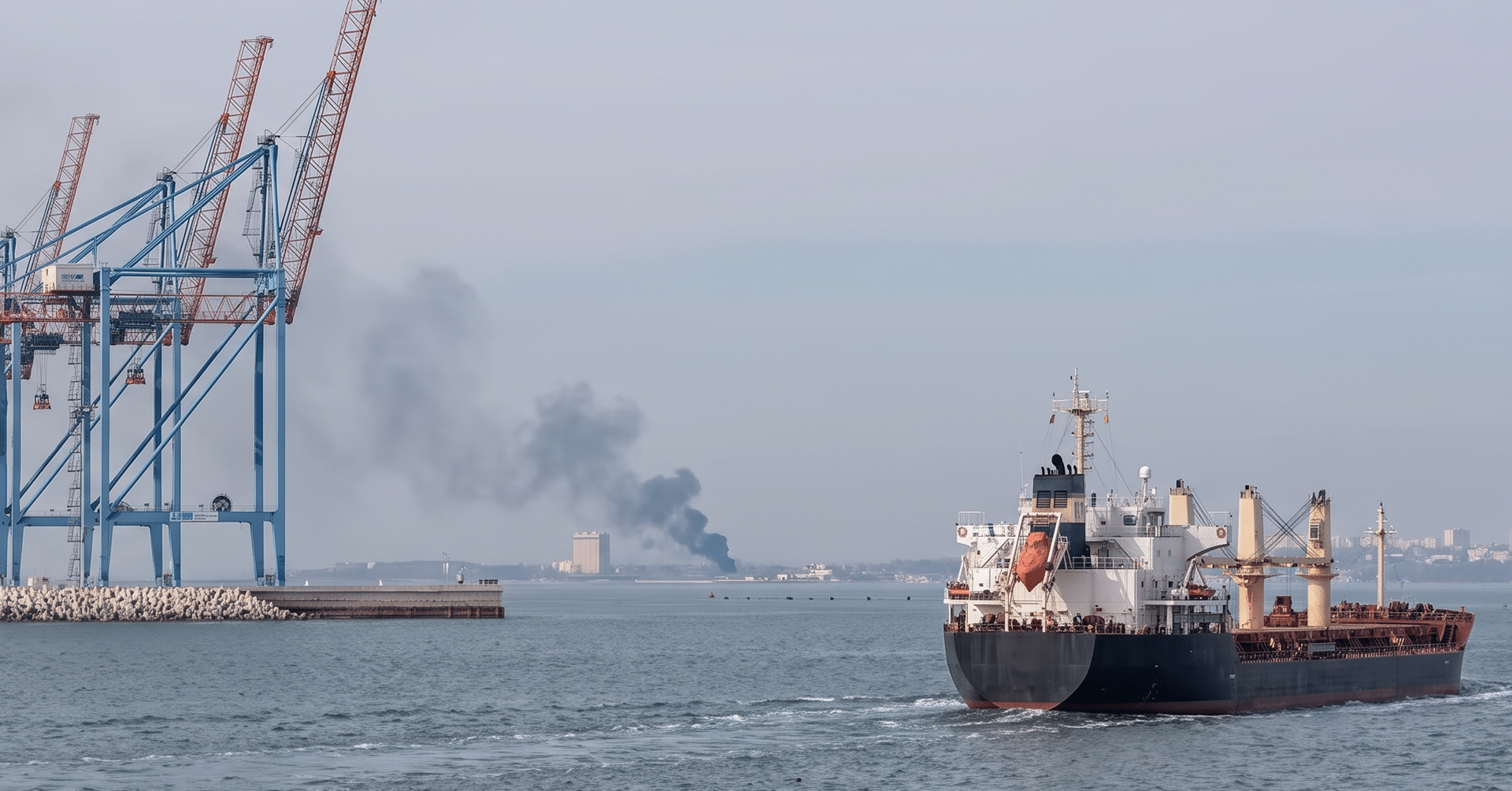
Exports plummeted in March and showed the slightest signs of recovery in April (+4.5% m-o-m). The main reason for this is the Black Sea ports blockade and logistical bottlenecks[1]. On the other hand, imports recovered quickly (+41% m-o-m in April) against the background of the liberalization of the imports ban and introduced taxation preferences. The list of critical imports was expanded, and consumer demand has gradually recovered after the first shocking month.
There is no reported data for the total exports in May yet, but the agricultural commodities exports increased by 180% m-o-m in tonnes according to the Ministry of Agricultural Policy. In total the agricultural goods and food products comprised approx. 44% of the annual per-war exports and the prices for grain have risen. Therefore, we expect May exports volume to increase.
The imports may also gradually increase further in May from April’s 45% of the pre-war average because of consumer demand recovery and the external migration trend slowly heading towards a U-turn.
Overall, the negative balance of goods and services widened drastically to USD 1.1 bn in April. May is likely to show an expansion of this gap. The current account was still in surplus, mainly due to the USD 0.8 bn international grants.
Exports and imports of goods, USD bn

Source: NBU
The research was conducted with the support of the German Economic Team. Conclusions in this paper are those of its authors and do not necessarily represent the views of the supporting organisation.

Explore more